⭐⭐⭐⭐⭐ 1000+ Google Trusted Reviews | 📧 info@pestcontroldubai247.com

Bed Bugs in Dubai Bed Space & Partition Rooms: A Tenant’s Complete Guide
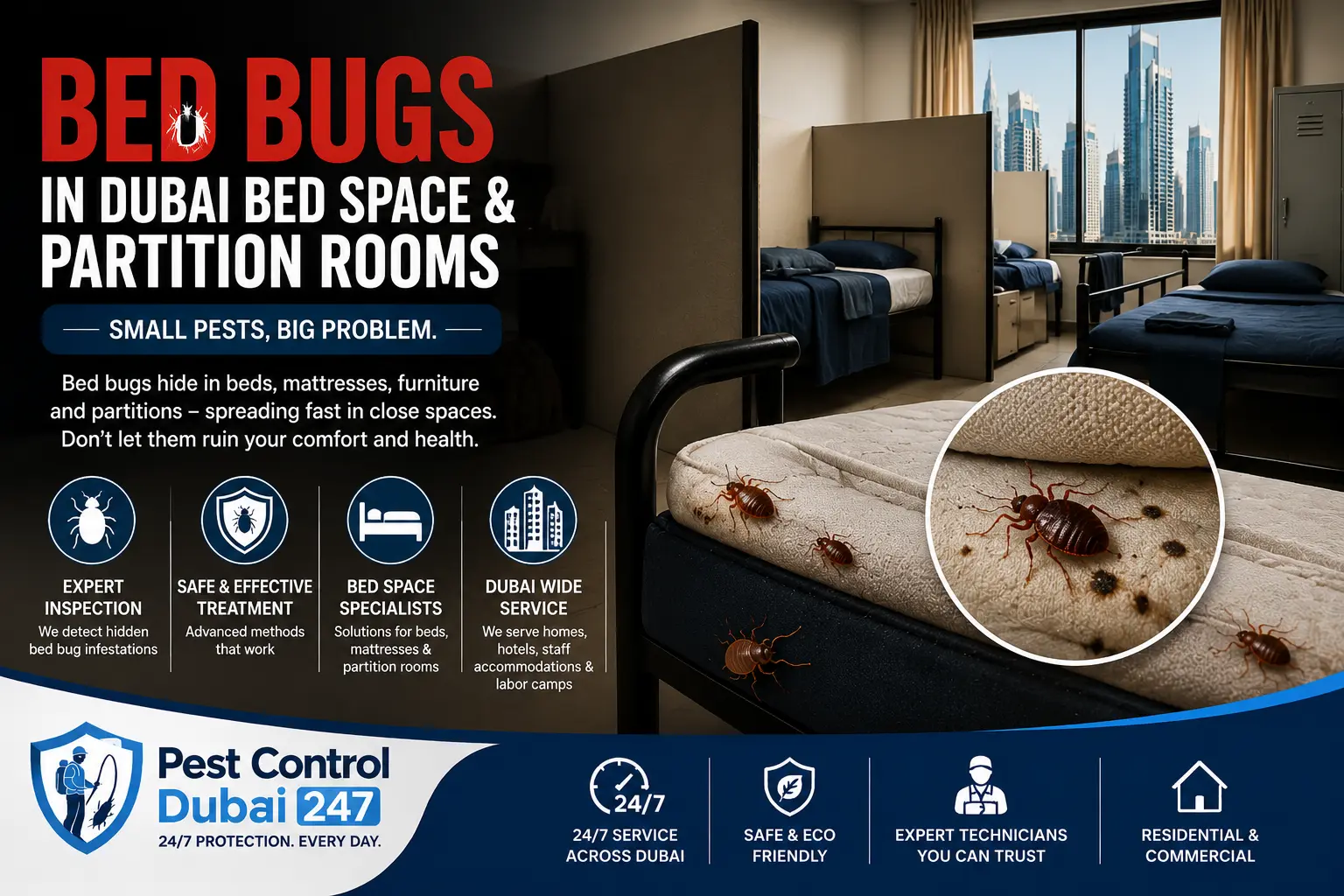
Bed bugs spread fast in Dubai bed spaces and partition rooms because many people sleep close together on shared mattresses and bunk beds, tenants constantly move in and out, and luggage arriving from overseas brings them in. One infested bed can seed an entire room within weeks. As a tenant you usually can’t fix the whole room alone but you can identify the problem early, protect your own bed and belongings, push the operator to act, and get a professional room treatment before it turns into a building wide nightmare.
Why Bed Spaces and Partition Rooms Are Bed Bug Hotspots
Bed bugs (Cimex lectularius) don’t come from dirt they come from people, beds, and belongings moving around. A Dubai bed space is almost the perfect environment for them, and here’s the honest breakdown of why:
- Beds are packed close together. Bunk beds and side-by-side single mattresses give bugs short, easy crawl distances from one sleeper to the next. In a villa room they’d struggle to find a host; in a partition room there’s a warm body every metre.
- High tenant turnover. People move in and out of bed spaces every few weeks. Every new mattress, suitcase, or backpack is a potential delivery vehicle. You inherit whatever the last tenant left behind.
- International luggage. Many bed space residents travel home and back. Bed bugs are world-class hitchhikers they ride in the seams of suitcases from any country and unpack straight into the room.
- Shared soft furnishings. Communal sofas, curtains, and second-hand mattresses hold bugs and eggs for months.
- Nobody feels in charge. In an informal shared room, no single person owns the problem, so early signs get ignored until the whole room is infested.
None of this is about being clean or dirty. Even a spotless, well organized person gets bed bugs if they sleep two feet from an infested bunk. Remember that the shame around bed bugs is exactly what lets them spread, because people hide the problem instead of reporting it.
How to Know If You Actually Have Bed Bugs
Before you panic or treat, confirm it. Look for these signs, strongest to weakest:
- Bites in a line or cluster on skin exposed while sleeping arms, shoulders, neck, legs. Bed bug bites often appear in a row of 2–3 (“breakfast, lunch, dinner”). Note: some people don’t react to bites at all, so no bites doesn’t mean no bugs.
- Small dark spots (like black pepper or marker dots) on the mattress seams, bed sheet, or the wall behind the bed this is bed bug faeces.
- Tiny blood smears on your sheets from a bug crushed after feeding.
- Pale, empty skin shells (moulted skins) in the mattress seams and bed frame joints.
- Live bugs flat, oval, reddish-brown, about the size of an apple seed. Check the mattress seams, the corners and screw holes of the bed frame, and the bunk ladder.
- A sweet, musty smell in heavy infestations.
Where to actually look: peel back the mattress and inspect the seams and piping first — that’s their number-one hiding spot. Then check the bed frame joints, the head of the bed, the wall behind it, and any furniture within a metre of where you sleep. Use your phone torch.
How Bed Bugs Spread Through a Bed Space Room
Understanding the movement is what lets you protect yourself. Bed bugs are nocturnal and mostly stay within a few metres of where people sleep but in a shared room, that radius covers everyone.
They spread by:
- Crawling from one mattress to the next, along the floor, up bunk legs, and through cracks in a partition wall.
- Hitchhiking on belongings your bag placed on an infested bed, clothes on a shared shelf, or a towel on a communal hook.
- Shared and second-hand furniture the single biggest cause in budget accommodation. A used mattress or sofa brought in “to save money” can carry a full colony.
- New arrivals’ luggage the classic entry event. Someone flies in, drops their suitcase on the bed, and the room is seeded.
A single female can lay hundreds of eggs in her lifetime, and eggs are glued into tiny cracks where sprays don’t reach. This is why the problem seems to explode you go from “a few bites” to a room-wide infestation in a matter of weeks if it’s ignored.
Relevant Topic: Cockroaches Coming From Your Kitchen Drain in a Dubai Marina
Who Is Responsible for Bed Bugs in a Dubai Bed Space?
This is the question no one answers clearly so here’s the practical reality. (This is general information, not legal advice; arrangements in Dubai vary and many bed space setups are informal.)
The general principle: in a formal tenancy, dealing with a pest infestation that isn’t caused by the tenant’s own negligence typically falls to the landlord or accommodation operator, because they control the shared space and the property. In a bed space, the person who rents you the bed and runs the room is effectively acting as your operator.
The complication: many bed space and partition arrangements in Dubai are informal and, in many cases, not officially permitted partitioned villas and over-occupied flats often breach Dubai’s accommodation rules. That means:
- There may be no written contract, which weakens your formal recourse.
- The operator has an incentive to stay quiet rather than call authorities or spend on treatment.
- You may share the room with people who don’t want the problem reported for the same reason.
What this means for you in practice:
- Report it in writing first a message to the operator or master-tenant asking them to arrange treatment. Keep the record.
- Push for a whole-room treatment, not one bed. Explain that treating a single bunk is money wasted because they’ll just walk back.
- If the operator refuses and conditions are genuinely unliveable, you can raise the issue through the building’s facilities management or, as a last resort, report the accommodation conditions to Dubai Municipality. Be aware this can also expose an illegal partition setup, so weigh it carefully.
- If you can, agree to split the cost of a professional treatment with roommates it’s faster than waiting for an operator who won’t act, and far cheaper than everyone re-infesting each other for months.
The uncomfortable truth: in an informal bed space, waiting for “someone” to take responsibility is how a small problem becomes a permanent one. The tenants who get relief are usually the ones who organise the room themselves.
What to Do the Moment You Spot Bed Bugs
Immediate tenant actions that actually help:
- Don’t move to another bed or room. Your instinct is to sleep elsewhere but that just carries bugs to a fresh area and spreads the infestation. Stay put and treat.
- Wash and heat everything you can. Bed sheets, clothes, and towels: wash hot and, crucially, tumble-dry on high heat for at least 30 minutes. Heat kills bugs and eggs; washing alone often doesn’t.
- Bag what you can’t wash. Seal items in plastic bags to stop them becoming carriers. Shoes and non washables can go in a sealed bag in direct Dubai sun for a day.
- Pull the bed away from the wall and stop bedding touching the floor, so bugs can’t use those as bridges.
- Do not spray random insecticide everywhere. Supermarket sprays scatter the bugs deeper into cracks and make professional treatment harder. Resist the can.
- Tell your roommates and the operator immediately. Speed and honesty beat shame here. The sooner the whole room acts, the smaller the job.
- Inspect your luggage before it goes anywhere, especially if you’re about to travel you don’t want to carry them home or to a new room.
Protecting Yourself When Roommates Won’t Cooperate
Sometimes you can’t get the whole room to act. You can still reduce your own bites and exposure:
- Buy an encasement (bed bug-proof zip cover) for your mattress and pillow. This traps bugs inside and stops new ones getting into the mattress core one of the most effective single things a tenant can do.
- Keep your bed as an island. Frame away from the wall, bedding off the floor, and nothing stored under the bed.
- Interceptor cups under the bed legs (small dishes that trap climbing bugs) tell you if bugs are still active and reduce them reaching you.
- Keep your belongings in sealed bags or hard cases, not open on shared shelves.
- Don’t sit or sleep on communal sofas during an active infestation.
These steps don’t eliminate a room infestation, but they protect your sleep and belongings while you push for a proper treatment.
Latest: Termite Inspection Checklist Before You Sign
Why DIY Fails in Shared Rooms
Bed bug eggs are cemented into cracks, seams, and frame joints where sprays never reach, and the bugs can survive months between meals. In a shared room the problem is multiplied across many beds at once treat one bunk and the others simply rein fest it. Foggers and “bug bombs” are especially useless: they push bugs deeper and spread them to adjacent partitions. This is not a DIY-friendly pest in a bed space. It needs a coordinated, whole-room, professional approach.
The Professional Approach for Bed Spaces and Bunk-Bed Rooms
Effective treatment for shared accommodation looks different from a single apartment:
- Whole-room, all-beds treatment every bunk, mattress, and frame in the room is treated together, because doing one bed is money wasted.
- Detailed inspection first locating harborage points in mattress seams, bunk joints, skirting, and partition gaps.
- Combined method targeted residual insecticide into cracks and seams, plus (where suitable) steam or heat treatment, which kills bugs and eggs on contact without soaking the room in chemicals.
- Follow-up visit bed bug eggs hatch on a cycle, so a single visit rarely finishes the job. A follow-up 10–14 days later catches newly hatched bugs before they breed.
- Prevention advice for the room encasements, decluttering, and a plan for new arrivals so it doesn’t come straight back.
At Pest Control Dubai 247 we treat bed spaces, partition rooms, and labour accommodation across Dubai the whole room in one coordinated visit, with follow-up, so bed bugs don’t keep circulating between beds.
Preventing Bed Bugs When You Share a Room or Travel
- Inspect any new or second-hand mattress before it enters the room check every seam.
- Never bring used sofas or soft furniture into a bed space without inspecting and, ideally, heat-treating.
- After any trip, unpack outside if possible, tumble-dry your travel clothes on high heat, and keep the suitcase off the bed.
- Use a mattress encasement from day one in a shared room treat it as standard kit, not an emergency response.
- Deal with the first bite fast. Early action in a shared room is the entire game.
Bed bugs in a Dubai bed space aren’t a sign you did anything wrong they’re a built-in risk of sleeping close together with people and luggage constantly moving in and out. The tenants who beat them act early, protect their own bed with an encasement, and organize a whole-room professional treatment instead of waiting for someone else to take charge.
Bitten every night in your bed space? Book a bed bug inspection with Pest Control Dubai 247 we treat shared rooms and bunk beds across Dubai, all beds at once, with follow up.
